Um LEVALUATION OF SUSTAINABLE STRATEGIES FOR PLASTIC COMPONENT PRODUCTION IN MICROGRAVITY ENVIRONMENTS
Keywords:
microgravity, plastic injection molding, sustainable manufacturing, sintering, additive manufacturingAbstract
The manufacturing of plastic components in microgravity presents both challenges and opportunities for long-duration space missions, as conventional processes depend on gravity-driven mechanisms and require adaptation for orbital use. This study investigates the feasibility of applying plastic injection molding in microgravity, emphasizing its potential to transform recyclable polymers into functional components using in-space resources. Different mold fabrication approaches that enable reusability were explored, including ceramic-based molds, epoxy molds with 3D-printed counter-molds, and sintering processes that enhance material strength and mold durability. Injection molding was selected for its capability to produce complex geometries with minimal post-processing and potential scalability in orbital environments. The methodology integrates a comprehensive literature review on additive manufacturing, sintering, and injection molding with experimental validation through the fabrication of ASTM D638 Type IV tensile specimens. Test samples were manufactured via fused deposition modeling (FDM) using PLA filament and by injection molding with PLA pellets, allowing comparison of mechanical performance across different mold fabrication methods. Results indicate that injection-molded PLA exhibits higher stiffness and tensile strength, whereas 3D-printed specimens demonstrate greater ductility due to anisotropy and interlayer bonding effects. Additionally, sustainable mold-making alternatives such as aluminum casting with 3D-printed patterns, direct metal additive manufacturing, and hybrid strategies are discussed. The findings highlight the importance of reusability, material circularity, and reduced payload mass to enhance mission autonomy, contributing to sustainable manufacturing and autonomous polymer production in microgravity, reducing Earth dependency and improving mission resilience.
References
Bartolo, P. J., et al. (2012). Advanced Manufacturing Technologies for Medical Applications. Wiley.
Gebisa, A. W., & Lemu, H. G. (2018). A review on 3D printing for customized manufacturing. Procedia Manufacturing, 30, 282–289.
Osswald, T. A., & Hernández-Ortiz, J. P. (2006). Polymer Processing: Modeling and Simulation. Hanser Publishers.
Rosato, D. V., & Rosato, D. V. (2000). Injection Molding Handbook. Springer.
Singh, S., Ramakrishna, S., & Singh, R. (2020). Material issues in additive manufacturing: A review. Journal of Manufacturing Processes, 61, 835–849.
Strong, A. B. (2006). Plastics: Materials and Processing. Pearson.
Tadmor, Z., & Gogos, C. G. (2013). Principles of Polymer Processing. Wiley.
Telles, C. (2019). Fundição Artística em Metal. Editora Senac São Paulo.
Mr. Forge (2022). How to Make an Aluminum Casting Mold using Green Sand. YouTube. Available at: https://www.youtube.com/watch?v=tzQrHk8onHw. Acessed on: jul 12, 2025.
Torrado, A. R., & Roberson, D. A. (2016). Failure analysis and anisotropy evaluation of 3D-printed tensile test specimens. Journal of Failure Analysis and Prevention, 16(1), 154–164. Acessed on: jul 12, 2025.
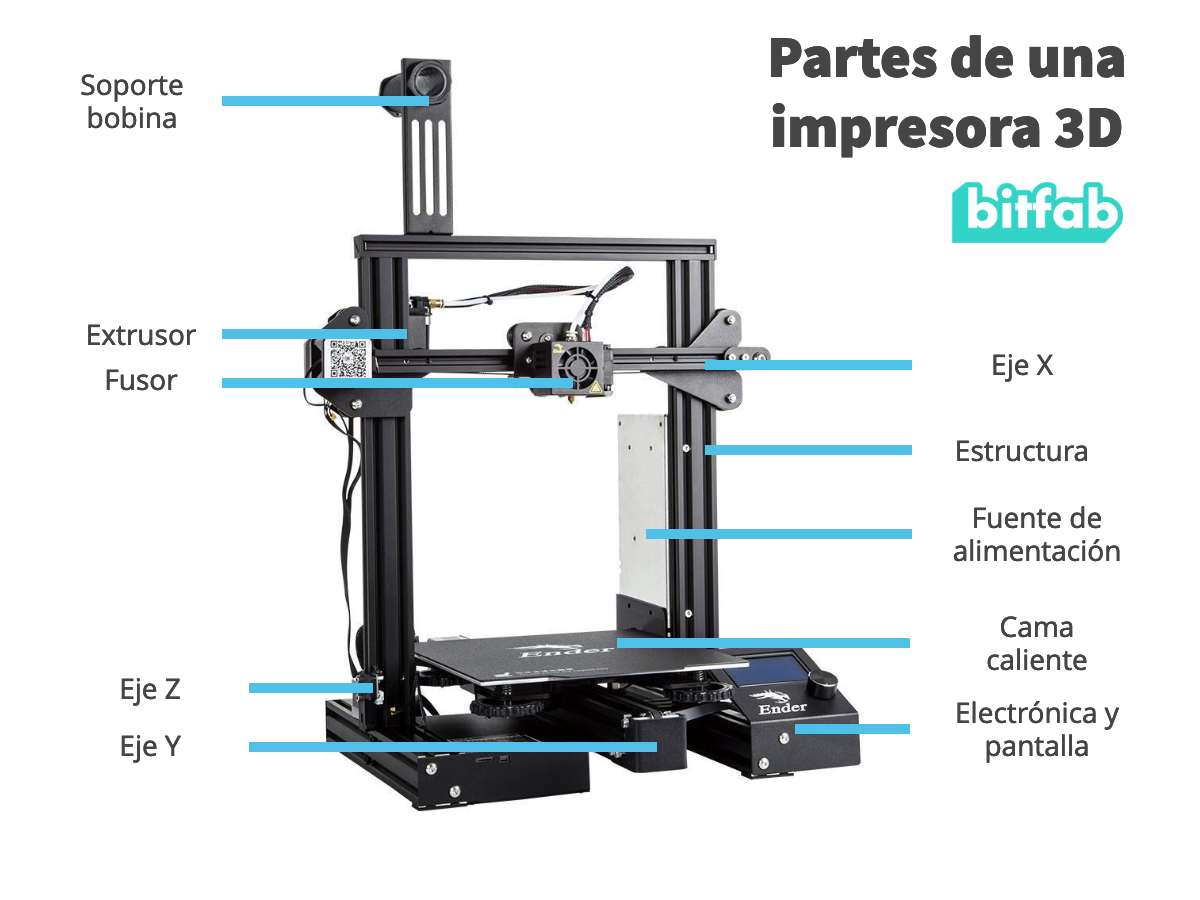
BITFAB. Partes de una impresora 3D. [Figure]. 2019. Available at: https://bitfab.io/wp-content/uploads/2019/11/Partes-de-una-impresora-3D-1.png. Acessed on: jul 12, 2025.
MACINJET. Injetoras de plástico de bancada. [Figure]. Available at: https://yata-apix-0a5e95e3-857b-498d-b80a-b1381d42f7cf.s3-object.locaweb.com.br/3dbddc9e349f4a3aa4e7821440f7e093.jpg. Acessed on: july 12,. 2025.
Froes, F., Boyer, R., Dutta, B. (2019). Additive Manufacturing for the Aerospace Industry. Elsevier.
Available at: https://doi.org/10.1016/B978-0-12-814062-8.00001-7. Acessed on: may 10, 2025.
Wang, L., Mosher, R., Duett, P. (2024). Additive Manufacturing in the Aerospace Industry. American Journal of Engineering and Applied Sciences, 17(3), 116–125. Available at: https://doi.org/10.3844/ajeassp.2024.116.125. Accessed on: may 6, 2025.
Najmon, J., Raeisi, S., Tovar, A. (2019). Review of Additive Manufacturing Technologies and Applications in the Aerospace Industry. In: Additive Manufacturing for the Aerospace Industry, Elsevier.
ALI, F. et al. Tensile Testing and Evaluation of 3D-Printed PLA Specimens as per ASTM D638 Type IV Standard. ResearchGate, 2018. Available at: https://www.researchgate.net/publication/329842682_Tensile_Testing_and_Evaluation_of_3D-Printed_PLA_Specimens_as_per_ASTM_D638_Type_IV_Standard. Accessed on: July 10, 2025.
XU, W. et al. Mass Customization of Polylactic Acid (PLA) Parts via a Hybrid FDM-IM Production Technology. Materials, vol. 16, no. 4, pp. 1-17, 2023. Available at: https://pmc.ncbi.nlm.nih.gov/articles/PMC9786657/. Accessed on: July 10, 2025.
GROOVER, M. P. Fundamentals of Modern Manufacturing: Materials, Processes, and Systems. 4. ed. Wiley, 2010.
FLAHERTY, K. E.; SCOTT, M.; et al. Comparison of dimensional tolerance grades for metal additive manufacturing processes. Additive Manufacturing, v. 34, p. 101326, 2020. Available at: https://www.sciencedirect.com/science/article/pii/S2212827120303887. Accessed on: July 5, 2025.
CAMPBELL, I.; HOPKINSON, N.; DICKENS, P. Rapid manufacture of metal castings using 3D printing technologies. Proceedings of the Institution of Mechanical Engineers, Part B: Journal of Engineering Manufacture, v. 217, n. 4, p. 445-455, 2011. Available at: https://www.emerald.com/insight/content/doi/10.1108/rpj-10-2024-0418/full/html. Accessed on: July 10, 2025.
HUANG, S. H.; LIU, P.; MOKASDAR, A.; HOU, L. Additive manufacturing and its societal impact: a literature review. The International Journal of Advanced Manufacturing Technology, v. 67, p. 1191–1203, 2013. Available https://labordoc.ilo.org/discovery/fulldisplay?docid=cdi_proquest_journals_2262364134. Accessed on: July 10, 2025.
KUMAR, S.; DIXIT, U. S. Energy consumption modelling and optimization in CNC machining. Procedia CIRP, v. 61, p. 446–451, 2017. Available at: https://www.sciencedirect.com/science/article/pii/S2351978918307753. Accessed on: July 5, 2025.
NATIONAL RESEARCH COUNCIL. Materials Processing in Space. Washington, DC: The National Academies Press, 1978. Available at: https://nap.nationalacademies.org/catalog/20033/materials-processing-in-space. Accessed on: July 5, 2025.
Downloads
Published
Issue
Section
License
Copyright (c) 2025 Revista Interdisciplinar de Pesquisa em Engenharia

This work is licensed under a Creative Commons Attribution-NoDerivatives 4.0 International License.
Given the public access policy of the journal, the use of the published texts is free, with the obligation of recognizing the original authorship and the first publication in this journal. The authors of the published contributions are entirely and exclusively responsible for their contents.
1. The authors authorize the publication of the article in this journal.
2. The authors guarantee that the contribution is original, and take full responsibility for its content in case of impugnation by third parties.
3. The authors guarantee that the contribution is not under evaluation in another journal.
4. The authors keep the copyright and convey to the journal the right of first publication, the work being licensed under a Creative Commons Attribution License-BY.
5. The authors are allowed and stimulated to publicize and distribute their work on-line after the publication in the journal.
6. The authors of the approved works authorize the journal to distribute their content, after publication, for reproduction in content indexes, virtual libraries and similars.
7. The editors reserve the right to make adjustments to the text and to adequate the article to the editorial rules of the journal.